How Just 5 Minutes of Daily Exercise Can Lower Your Blood Pressure

As little as five minutes of daily physical activity can reduce blood pressure and aid in preventing cardiovascular issues, according to research findings.
Incorporating brief periods of physical activity into your everyday schedule – like choosing stairs over elevators or opting for biking – may help lower these measurements.
Experts suggest that minor adjustments to daily habits, such as replacing five minutes of television viewing with five minutes of jogging, can substantially improve cardiovascular well-being.
The research indicates that exercises which increase your heartbeat, such as dancing, running, or even thorough housecleaning, offer the most significant advantages.
Researchers from University College London University College London (UCL) and the University of Sydney examined 14,761 individuals utilizing activity trackers to investigate the connection between their everyday movements and blood pressure levels.
Throughout the day, individuals typically allocated approximately seven hours for sleep, ten hours engaged in sedentary activities like sitting, three hours standing, one hour of slow walking, another hour of brisk walking, and roughly 16 minutes dedicated to exercises that elevated their heart rates, including jogging and biking.

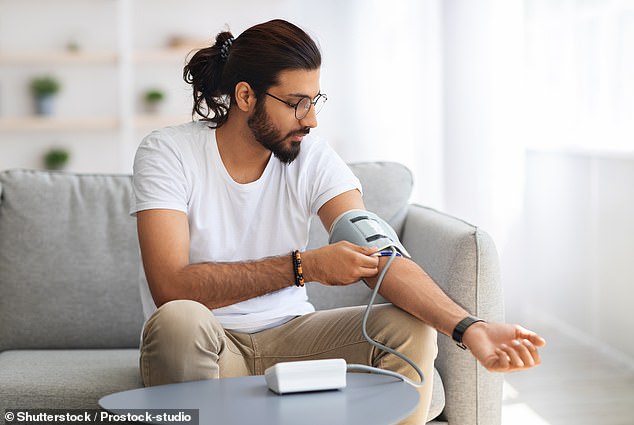
Adding an additional five minutes of physical activity that elevates your heart rate, like climbing stairs, jogging, or biking—replacing one of the other activities—was associated with lowering systolic blood pressure (SBP) by 0.68 millimeters of mercury (mmHg) and diastolic blood pressure (DBP) by 0.54 mmHg.
The systolic value is the upper figure in a blood pressure measurement, indicating the pressure exerted as the heart pumps blood throughout the body. The diastolic value is the lower number, reflecting the pressure during the period of cardiac rest between contractions.
According to the researchers, lowering systolic blood pressure (SBP) by 2 mmHg and diastolic blood pressure (DBP) by 1 mmHg at a population level equates to roughly a 10 percent decrease in the risk of developing heart disease.
This might be accomplished by shifting 20-27 minutes away from other activities towards exercise for the higher figure, and redistributing 10-15 minutes for the lower figure, according to the study in Circulation.
For instance, substituting 21 minutes of inactive sitting, 22 minutes of standing, or 26 minutes of leisurely walking with activities like cycling or running could produce the same outcome.
To improve diastolic blood pressure, one could replace 10 minutes of brisk walking, 11 minutes of inactive sitting, or 13 minutes of sleep with appropriate physical activity.
In the UK, high blood pressure stands as the primary factor for strokes and heart attacks, affecting approximately 14 million adults; among these, about five million cases remain undiagnosed.
Left unchecked, the heart might enlarge gradually because of heightened pressure, reducing its efficiency in pumping blood and potentially resulting in heart failure.
Dr. Jo Blodgett, the lead author from UCL, stated, "Our research indicates that for the majority of individuals, engaging in physical activity is more effective at lowering blood pressure compared to milder activities like walking."
'The encouraging part is that regardless of your level of physical capability, you can see a beneficial impact on your blood pressure relatively quickly.'
'Our exercise variable stands out because it encompasses all types of activity that resemble exercises, ranging from taking the stairs to a brief bicycle trip for errands, most of which can easily be incorporated into everyday life.'
'Even for individuals who aren't very active, walking can still provide certain advantages when it comes to lowering blood pressure.'
'However, if you aim to alter your blood pressure, increasing the load on your cardiovascular system via exercise will yield the most significant impact.'
Read more