Trump: Xi Jinping's Visit to Washington Set for 'Soon'

US President Donald Trump On Monday, he stated that his counterpart from China, Xi Jinping ,, plans to visit Washington in the “not too distant future,” following recent indications that the leaders might convene a summit as early as April, amidst their ongoing trade disputes involving reciprocal tariffs.
During a discussion about enhancing the aesthetics of Washington D.C., Trump made this remark while attending a board meeting at the John F. Kennedy Center for the Performing Arts. He took up the chairmanship last month after dismissing the previously appointed board members who were selected by his predecessor. Joe Biden .
Trump criticized Washington's highways as being severely deteriorated due to age and poor condition, describing them as an eyesore. He also mentioned that Xi will visit sometime soon.
Are you looking for insights into the most significant issues and global developments? Find your answers here. SCMP Knowledge Our latest platform features handpicked content including explainers, FAQs, analyses, and infographics, all provided by our esteemed team of experts.
Remarking that Washington looked "very good" during his first presidential term, Trump suggested the city should be cleaned up, particularly removing homeless encampments and graffiti in preparation for Xi's potential visit.
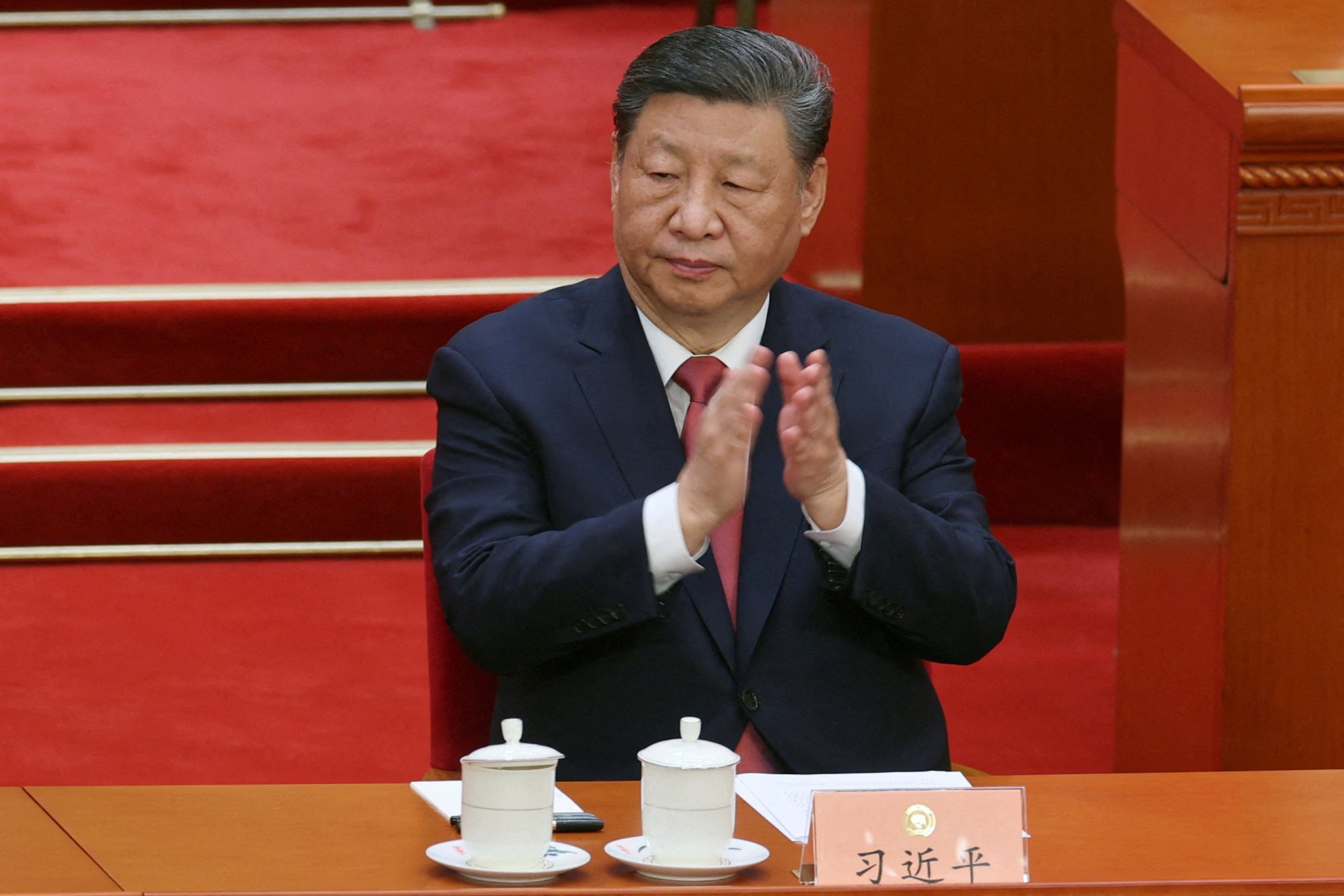
Earlier this month, the Post mentioned several unnamed sources when reporting that Trump might travel to China. as soon as the following month , even though the dates had not been finalized yet.
It was mentioned that Trump desired for Xi to come to his Mar-a-Largo property in Florida, which hosted their previous meeting back in 2017. Nonetheless, Beijing favored a more official environment, possibly arranging the discussion in Washington or through an invitation extended to Trump to travel to China.
The Wall Street Journal additionally reported that representatives from both parties were engaged in talks regarding a possible "birthmonth summit" scheduled for June, the month when both leaders celebrate their birthdays.
Since assuming power, Trump has escalated his tariff policies against Chinese goods by imposing different levies on them. Mexico and Canada In reaction to trade disparities, unlawful migration, and issues with the United States fentanyl crisis.
Although Mexico City and Ottawa have engaged in negotiations with the US, Beijing has responded by imposing 10 to 15 percent tariffs on certain American agricultural goods and has also imposed sanctions on several U.S. corporations.
Earlier this month, China’s Ministry of Foreign Affairs stated in an announcement, “Should the U.S. desire conflict—be it a tariff war, a trade war, or another form of confrontation—we stand prepared to see it through until the very end.”
Previously, Trump frequently referred to Xi as a "friend" who had a smooth rapport during his first term. He mentioned that their relationship became strained following this period. coronavirus pandemic .
In December, Trump stated that the U.S. and China had the potential to resolve all of the world's issues collaboratively.
Upon assuming office on January 21, Trump issued an executive order that granted special privileges to a major Chinese-owned social media platform. TikTok A reprieve lasting until April 5 has been granted to secure an American purchaser following the US Congress’ implementation of a prohibition on the platform due to national security worries, with the US Supreme Court affirming this decision.
During his initial presidency, however, Trump launched a trade conflict with China, blaming it for implementing unjust policies. In 2018, he issued an executive order imposing as much as 25 percent tariffs on $300 billion worth of goods imported from China.
To alleviate tensions, both parties inked the so-called phase one agreement in 2020. China committed to purchasing $500 billion worth of U.S. goods over the subsequent two years. Nevertheless, following President Biden’s inauguration in 2021, the accord encountered difficulties.
Recently, Trump and his trade representatives have demonstrated an inclination to evaluate and rejuvenate the phase-one agreement. In contrast, he has also imposed further reciprocal tariffs on every one of America's trading partners, set to take effect from April 2nd.
In 2018, the United States' trade gap with China reached its highest point at $419 billion. The previous year, this figure stood at approximately $300 billion, marking an increase of over 5 percent compared to 2023.