From Brussels to Berlin: Tightening the Rules on Transparency and Ethics for Europe's Lawmakers

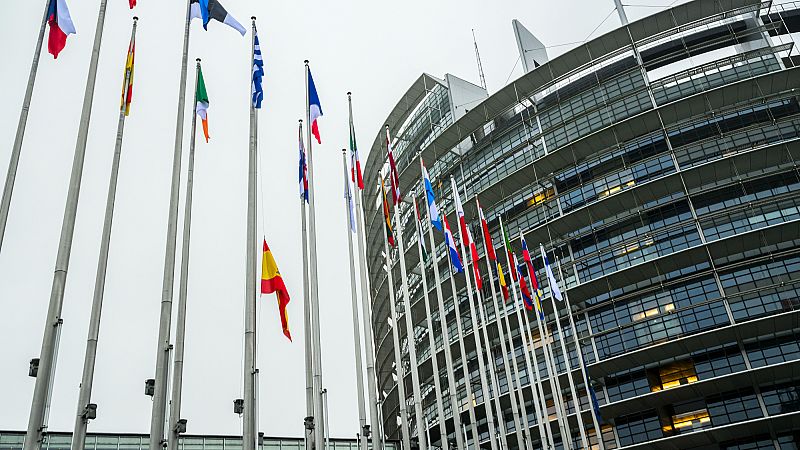
Recent news stories involving a new corruption investigation tied to the Chinese technology firm Huawei, the French court barring Marine Le Pen from politics due to embezzlement charges, and Hungary’s plan to impose financial disclosure requirements similar to those faced by local politicians onto Members of the European Parliament have brought issues of transparency and ethical conduct among MEPs into sharp focus.
However, there's a catch: Members of the European Parliament (MEPs) have to adhere to a detailed Code of Conduct filled with regulations regarding transparency and ethical lobbying practices. What exactly does this entail? And how does it stack up against standards in other EU nations?
Consider the Code of Conduct as the parliament's handbook. Initially implemented in 2012 and updated in 2023, this document aims to maintain oversight over Members of the European Parliament (MEPs), guaranteeing their actions reflect principles of integrity, openness, and sincerity, thereby protecting the institution's standing.
Fundamentally, the Code emphasizes that public service should remain untainted by both financial and family-related conflicts of interest. In line with this, Members of the European Parliament (MEPs) are required to maintain a clear distinction between their personal and official affairs and must disclose their individual interests, possessions, as well as any possible conflicts of interest.
For instance, after the scandal involving Qatari officials at the European Parliament, Members of the European Parliament (MEPs) are now required to disclose any income from external activities totaling more than €5,000 within a single calendar year. However, unlike in many other nations, EU regulations permit MEPs to hold additional employment, a policy that has previously attracted criticism. criticism From non-governmental organizations and civic groups.
In order to enhance transparency even more, Members of the European Parliament (MEPs) are required to disclose details about their interactions with both internal and external EU lobbyists and officials. They must also report on any journeys or occasions where third parties cover costs related to their travels, accommodations, or other expenditures. All this data can be found in their public profiles; however, their financial asset disclosures continue to stay confidential.
Should an MEP receive a gift valued at over €150 during their official responsibilities, they are required to disclose and log it in a publicly accessible registry. This allows anyone who is interested to explore what treasures reside within the Parliament’s collection.
Certainly, rules hold minimal value without proper enforcement. If an MEP violates the code, they might confront penalties instituted by the President of the European Parliament — presently Roberta Metsola — with these measures being disclosed during a public plenary session.
Nevertheless, these regulations differ from one country to another, with each parliament having its distinct guidelines concerning transparency, lobbying, and conflict of interests. Euronews examined the circumstances in Hungary, Spain, Italy, France, and Germany. Below is an overview:
Hungarian proposed legislation aims at targeting MEPs
A few weeks ago, Hungary’s governing coalition party, Fidesz-KDNP, introduced a potential legislation that might impose comparable disclosure requirements on Members of the European Parliament (MEPs) as those applied to local politicians. Under this proposal, MEPs would be required to declare their financial holdings when they start their term, upon completion of their tenure, and annually each January during their service period.
These declarations would go further than those made by the MEP to also cover family members residing in their household; however, whereas the disclosures related to the MEP would be publicly available, those concerning family members would remain private.
These statements should encompass details of properties and vehicles, financial investments, all sources of income or recurring payments, as well as any roles held within companies or public, non-profit entities.
The revised bill states that Members of the European Parliament who do not adhere to the updated transparency requirements might have their terms annulled by the National Elections Office (NEO). It also implies potential consequences for opposition figurehead Péter Magyar. claimed .
Spain’s regulations for lobbyists seem to be ineffective.
For instance, in Spain, there isn't a lobbyist registry like the one at the European level; however, both members of parliament and senators must disclose their official agendas, which include meetings with what are referred to as "interest representatives."
However, in reality, this prohibition fails to stop lobbyists from arranging meetings with Members of Parliament (MPs) without leaving any record, as indicated by a recent report from the Conflict of Interest Office of the Spanish Parliament.
When it comes to gifts, the regulations for senators closely mirror those observed by Members of the European Parliament (MEPs) in Brussels. Neither group may accept presents that might appear to sway their judgments. Gifts valued above €150 generally shouldn’t be accepted unless they come from close acquaintances personally or are widely offered discounts applicable to all attendees. Any gifts received during formal functions ought to be handed over to the respective chamber; this ensures transparency with records posted online for public view.
Members are required to disclose all professional activities conducted over the past five years and must report any contributions, gifts, or monetary aid that might affect their duties. Additionally, they need to specify if they have collaborated with charitable organizations or groups.
This data should be posted on the Congress or Senate website for any citizen to review in an understandable and accessible manner.
Italy's guidelines for members of parliament lack mandatory enforcement.
Theoretically, Italian Members of Parliament and senators must adhere to two distinct sets of guidelines: the code of conduct implemented in 2016 for the Chamber of Deputies and another one established in 2022 for the Senate. However, what exactly do these regulations stipulate?
Senators and deputies must file a statement of assets—covering taxes, properties, and electoral spending—within three months after winning their seats. Members of parliament (MPs) take it further by declaring positions held in both corporate and government entities within thirty days post-election. This comprehensive disclosure becomes publicly accessible via an online platform.
Regarding gift policies, things become intriguing. The Chamber of Deputies has a straightforward guideline: no presents valued at over €250 should be accepted. Additionally, if someone else covers expenses related to their travel, lodging, or dining—such as an event organizer—they must disclose this information publicly.
On the contrary, the Senate has a far more lenient approach. Rather than imposing limits, senators are merely required to ensure that any gifts they receive align with the 'etiquette of politeness,' leaving considerable flexibility due to its ambiguous nature.
However, the key point is this: the Senate’s code is mandatory, whereas the one for the Lower House is not, which means it functions more as a series of recommendations rather than strict regulations.
In 2013, France established an autonomous oversight body.
Starting from 2013, France has intensified its monitoring of political activities through the establishment of the High Authority for the Transparency of Public Life (Haute Autorité pour la Transparence de la Vie Publique, HATVP). This autonomous body aims to oversee elected representatives; however, as reported by Le Monde, it primarily concentrates on detecting fiscal impropriety and managing expenditures, leaving moral issues frequently unaddressed.
In 2017, Emmanuel Macron’s administration proposed legislation aimed at "restoring trust in public life," which would broaden the HATVP's duties. The expanded roles encompassed overseeing familial job placements and mandating that presidential hopefuls disclose both their assets and personal interests.
A few years later, in 2019, an additional law transferred further responsibilities to the HATVP, assuming tasks that were formerly under the purview of the Commission de Déontologie de la Fonction Publique.
Currently, the interest and activity disclosures of deputies, senators, and Members of the European Parliament can be accessed online through the High Authority’s website. As for French MEPs, their asset declarations have been published on this platform since 2019.
Failure to report, inaccuracies, or providing incorrect information subjects politicians to a potential prison term of up to three years and a fine of €45,000.
Germany established its own transparency registry.
In 2021, Germany considerably strengthened the transparency and ethical standards for Members of Parliament through a new Transparency Act, mandating that these members disclose all interests they advocate for.
Currently, Members of Parliament are required to disclose their stakeholdings in companies exceeding 5%, which marks a significant change from the earlier threshold of 25%. Additionally, bribery legislation has been strengthened, resulting in potential jail terms ranging from one to ten years.
In order to avoid conflicts of interest, Members of the Bundestag are prohibited from receiving additional funds or perks apart from their standard salaries—particularly if such compensation is intended as an incentive for political favors. Furthermore, they must provide appropriate services in exchange for any form of payment received; however, accepting donations continues to be permissible.
MPs must disclose their past and current side jobs, including consultancy, lobbying, writing, or lecturing—unless these activities earn less than €1,000 per month or €10,000 per year.
Not reporting the mandatory details may lead to penalties equivalent to as much as six months' worth of wages.