What We Know About the 'Coalition of the Willing' Supporting Ukraine

As a whole, Europe hasn't been this unified and robust in quite some time.
Keir Starmer, the prime minister of the United Kingdom, has characterized the diplomatic effort aimed at forming a "coalition of the willing" to protect a possible agreement that could conclude Russia’s invasion of Ukraine. This initiative gained immediate importance following Donald Trump’s unexpected move of starting talks with Vladimir Putin without prior notice to Europe.
Ever since the 90-minute telephone conversation on February 12th, European leaders have been striving to reclaim their influence amid rapidly evolving circumstances, ensuring their voices are acknowledged and their concerns addressed. A key aspect of this effort involves securing Ukraine’s existence as an autonomous and self-governing state, thereby curbing President Putin’s expansionist ambitions. Many worry that without intervention, his aggressive plans may proceed unopposed if his current military incursion succeeds.
Achieving this will necessitate a durable and lasting peace agreement.
However, Europe remains highly skeptical of Russia due to its failure to uphold obligations under the Minsk accords aimed at resolving the conflict in Donbas. Consequently, faced with its most devastating continental conflict since World War II, Europe is uniting more extensively and decisively than ever before to ensure history does not repeat itself.
Clarity is our objective: achieving peace," stated French President Emmanuel Macron following a leadership conference in Paris earlier last week. "For this purpose, we need to place Ukraine in an optimal situation for negotiations so as to guarantee that the resulting peace agreement will be robust and enduring not just for Ukrainians but also for everyone across Europe.
This is all the information we have gathered up until now regarding the "Coalition of the Willing."
Who is involved in the alliance?
The roots of the alliance were established on February 17th, when Macron did this. convened A brief gathering of leaders in response to the Trump-Putin telephone conversation. The carefully chosen attendees indicated that a novel political framework might be forming.
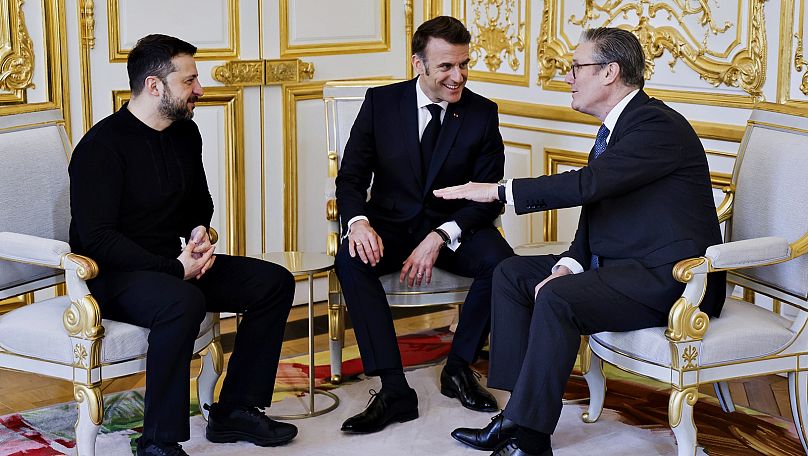
Just under two weeks after the fact, on March 2nd, as Europe grappled with the aftermath of President Volodymyr Zelenskyy’s challenging visit to the Oval Office, Keir Starmer organized a follow-up gathering of leaders in London. This event featured an expanded roster of attendees compared to the previous one.
Following the conclusion of the highly anticipated discussions, the prime minister announced in public the formation of a "Coalition of the Willing," jointly led by Britain and France.
The gathering in Paris last week increased the count of attendees even more.
In addition to Macron, Starmer, and Zelenskyy, the summit included leaders from Belgium, Bulgaria, Croatia, Cyprus, the Czech Republic, Denmark, Estonia, Finland, Germany, Greece, Iceland, Ireland, Italy, Latvia, Lithuania, Luxembourg, the Netherlands, Norway, Poland, Portugal, Romania, Slovenia, Spain, and Sweden.
Turkey dispatched its vice president, Cevdet Yilmaz, whereas Australia and Canada had their respective ambassadors present in France.
Ursula von der Leyen, who leads the European Commission; António Costa, head of the European Council; and Mark Rutte, Secretary General of NATO, were among those in attendance, thereby broadening the scope of the discussions.
In total, 33 delegations.
Starmer had earlier referenced Japan and New Zealand as part of the alliance, despite neither country participating in the recent gathering in Paris.
Who isn’t part of the alliance?
It’s evident that most of the coalition participants are also part of the European Union, an organization to which Ukraine aspires to become a member someday.
Nevertheless, there are some striking exceptions.
So far, Malta and Austria haven't participated in the gatherings because of their nations' policy of neutrality. In contrast, Ireland, despite being neutral as well, took part in the discussions in Paris. "We're ready to contribute all our efforts to assist," stated Micheál Martin, the Taoiseach, back in March.
Hungary and Slovakia are the additional EU nations that haven’t signed up for the coalition. Despite being part of NATO, neither country is taking a neutral stance; however, they fundamentally differ with others regarding Europe’s strategy towards the conflict. Both Hungary and Slovakia argue against providing military support to Ukraine, viewing such actions as provocative escalation.
Viktor Orbán has raised his dissent to a higher degree and successfully obstructed on two occasions. joint EU conclusions Regarding Ukraine, although Slovakia supported the statement.
Switzerland, a longstanding neutral country, along with the six Balkan nations, has also stayed out of the talks.
What projects is the coalition currently engaged in?
Macron outlined during the conclusion of the Paris summit that the "Coalition of the Willing" has set up "three areas of focus".
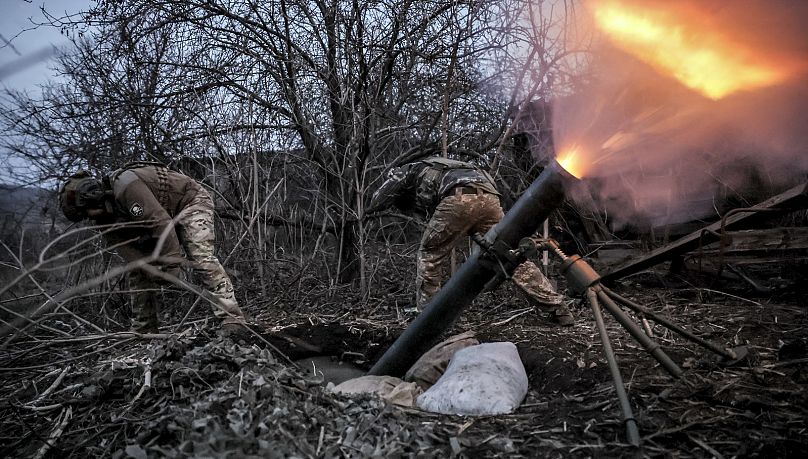
Initially, sustained backing for Ukraine’s armed forces is essential; both Kiev and Europe view this as the primary security assurance to prevent Russian hostility. Improved relations between Washington and Moscow have resulted in fresh commitments of military aid from various European nations, emphasizing artillery, air defense systems, missiles, drones, and training initiatives.
Secondly, the development of an entirely new brand reassurance force That might be implemented within Ukraine’s territory as another measure of security assurance.
Macron swiftly emphasized that the force would not serve as a peacekeeping unit deployed along the frontline. He proposed that this responsibility ought to be taken up by either the United Nations or the Organization for Security and Co-operation in Europe (OSCE).
Macron stated instead that the assurance force would be stationed at "specific strategic points" throughout the nation, including urban areas, harbors, and energy facilities, serving as a deterrent against Russia. Troops from Western countries might be dispatched for operations on land, air, and sea.
"At present, nothing is off-limits," the French president stated to journalists.
Starmer stated that with the establishment of this new force, the coalition will be prepared to implement a peace agreement once its specific details become clear.
This military force is meant to discourage Putin and convey that this agreement will be protected," he further explained. "That’s reportedly the most accurate way to describe it.
The third area of focus is enhancing Europe’s defense capacities. The European Commission has suggested a new initiative aimed at leveraging up to €800 billion In new defense investments, where Ukraine is anticipated to see benefits.
In how many countries have forces been deployed?
The issue of deploying troops directly has been hanging over the coalition since their initial gathering. Even now, it continues to be controversial despite gaining political momentum.
Up until now, only France and the UK have formally agreed to send troops as part of the reinforcement unit. These two nations stand out among European countries for possessing nuclear arms. Additionally, both hold permanent seats on the United Nations Security Council.
Consensus is lacking on this issue," Macron acknowledged. "While some countries lack the capability to take action, others face political environments that prevent them from doing so.
As discussions progress, other alliance members are anticipated to commit forces.
Sweden, Denmark, and Australia have openly stated they are willing to contemplate deploying their troops to Ukraine as part of an international effort. Additionally, Belgium has indicated that it would seem reasonable for them to join such a mission "if Europe chooses to proceed with this plan."
In contrast, Poland and Greece, which are among Europe’s largest defense budget contributors, have declared they will not deploy troops on the ground because of the challenges posed by their neighboring countries (Belarus for Poland, and Turkey for Greece).
The Italian Prime Minister, Giorgia Meloni, has likewise dismissed the idea, raising questions about the "efficacy" of the Franco-British plan.
"As I see it, implementing this is quite challenging," she stated last month.
In the meantime, Russia has consistently objected to any proposal allowing for the placement of Western forces within Ukrainian territory. However, both Macron and Starmer have stated that these objections will not influence the discussions among the alliance members.
"Russia is not the one who will decide what occurs in Ukrainian territory," stated Macron.
Starmer stated, 'We understand Russia's objectives. Its aim is a defenseless Ukraine.'
Is the U.S. going to have any involvement?
Currently, the US is not part of the "Coalition of the Willing." The primary reason for the coalition’s existence is that Trump disrupted the three-year solidarity among allies and chose to independently engage in talks with Putin instead.
Nevertheless, the team remains hopeful that the US could join the effort later on and offer support to the reinforcement unit, potentially through aerial defense or information exchange. Such involvement may encourage additional countries to deploy more forces.
This is the so-called "US backstop" that Starmer has referred to several times.
Just as I have often stated, this necessitates the involvement and backing of the United States," Starmer remarked. "We have discussed this extensively with the US president on numerous occasions.
British and French officials have maintained frequent communication with President Trump to ensure he stays informed regarding the advancements achieved by the alliance. They frame their efforts as beneficial for both Europe and America, aiming to support the peace agreement that Trump seeks to establish.
Even with numerous diplomatic efforts, such as trips to the White House, there has been no sign that the U.S. plans to provide the well-known "backstop." In fact, the Trump administration seems to be hinting at a steady decrease in American troop levels in Europe.
Macron stated that there is ambiguity regarding the extent of America’s obligations post the event. He emphasized the importance of striving for the best outcomes while being ready for potential difficulties.
What comes next for the alliance?
After high-level meetings in Paris and London that expanded its membership, the coalition is now concentrating on refining the specifics of the support force. President Zelenskyy has extended invitations for military delegates to tour Ukraine and initiate technical talks aimed at solidifying this conceptual initiative.
"We require precise, actionable choices—and a collective outlook for the upcoming security framework," he stated. told leaders last week.
Zelenskyy highlighted several key points that require clarification: Which nations will contribute troops for ground, aerial, and naval operations? Precisely where will these forces be stationed? What size will this assurance contingent be? What organizational framework will they follow? And how will the unit react should there be a Russian threat?
Zelenskyy introduced an additional query: "When will our alliance send troops into Ukraine: at the start of a truce or only after the conflict has completely ended and terms have been settled?"
It is anticipated that the findings from this project will be shared with high-ranking officials at a future summit, though an exact date hasn’t been confirmed. As reported by AFP, the defense ministers within the alliance plan to convene on April 10th in Brussels.