FBI Warns iPhone Users: Avoid Scam Clicks as National Fraud Alert Goes Viral

- EXPLORE FURTHER: Critical alert for 3.2 million Google Chrome users: ‘Remove immediately’
The FBI is alerting about a texting scam that has been targeting Americans for months and is now expanding into additional states.
The ongoing scheme Has been attempting to deceive individuals into believing they have outstanding road tolls and must settle these payments promptly to evade hefty late charges.
Government authorities stated that individuals with smartphones should delete these messages immediately And notify the genuine toll service that the scammers are pretending to be from.
As per the FBI’s internet report Crime The Complaint Center (IC3) has already recorded more than 2,000 reports regarding this smishing scam.
'Smishing' refers to an assault carried out by cyber criminals through deceptive text messages aimed at persuading individuals to disclose personal data, transfer funds, or install malicious software on their mobile phones.
In the spring of 2024, IC3 issued a warning that this scam was focusing on smartphone users across at least three states.
A year later, the criminals appear to be targeting most of the US, from New York to Washington state .
In a fresh warning this month, FBI agents in Seattle said locals need to be on the lookout for more fake messages about unpaid tolls, mounting debt by drivers, and threats of stiff fines .
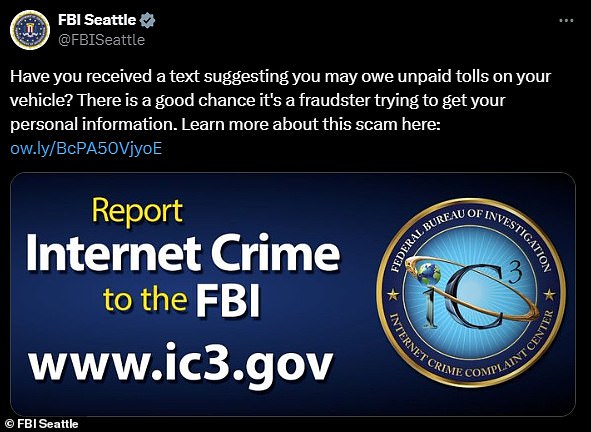

The alert from Washington state emerges mere weeks after this scheme drew the focus of the Federal Trade Commission (FTC).
'Fraudsters are posing as toll authorities nationwide and sending messages asking for payment,' wrote FTC officials. a statement in January.
"The suspicious message may display an amount of money indicating what you allegedly owe and could contain a link directing you to a webpage where you can input your banking or credit card details—but this is actually a phishing scheme," the organization went on to explain.
IC3 posted an image illustrating how these counterfeit text messages appear, mimicking the appearance of official communications from the state toll service.
The message asserts that the recipients have not paid particular unmentioned road fees and offers a website link where they can settle their dues before being charged a late fee.
Anyone who clicks on these links falls into the scammer's trap, as the link takes them to a phony webpage that prompts victims to type in their personal data and credit card details, allowing scammers to steal the information.
Furthermore, the fake link might also install malware on the device being used, granting hackers access. access to someone's smartphone .
Even though there’s a risk of being deceived by fraudulent toll collection entities, authorities have observed that this method is considerably more careless compared to scams where con artists pose as governmental employees.
A lot of the beneficiaries do not own a vehicle or are not connected to the state where the bogus SMS messages originate.
Vermont Attorney General Charity Clark recently said in an Instagram video We don’t have toll roads in Vermont, but visitors might confuse these scams with legitimate toll collectors in other states.
The Louisiana Attorney General, Liz Murrill, also commented additionally Facebook It's a scam. If you get a text that seems questionable, make sure not to click on it.
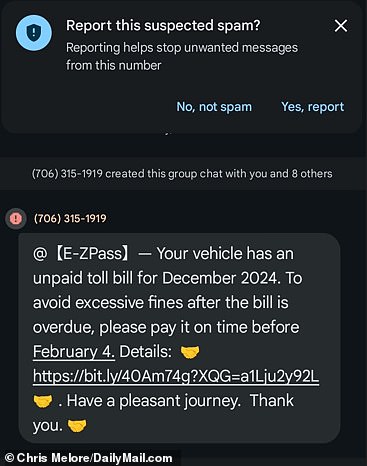
At the beginning of February, I got a message from a phone number linked to Atlanta, Georgia, stating that I owed money for some unattended E-ZPass charges.
Sadly for the con artist, I've never had an E-ZPass and have never been behind the wheel in Georgia, making it obvious right away that this was a scam attempt.
Moreover, which governmental organization would include three emojis in a text message regarding outstanding fines?
For U.S. drivers who do not utilize an electronic toll-collection system such as E-ZPass, it’s crucial to understand that the authorities will not request payment via text message.
When you go through a tunnel, traverse a bridge, or even travel on a state highway that isn’t equipped with a toll booth yet still manages to bill you, those charges show up as invoices sent via snail mail.
Whether you see them or not, there's a camera somewhere taking a picture of your license plate, and that bill is sent to the home of the person connected to that car, according to department of motor vehicle records.
What steps should you take when such a scam text appears on your mobile phone?
Before deleting the message without responding, IC3 asked people to file a complaint on their website , providing agents with the telephone number and fabricated website address that were forwarded.
Next, locate the official website of the tolling service mentioned in the text and verify your account details (assuming you have an account).
Alternatively, you can dial the official telephone number of that organization and request to talk to their customer support regarding the impostors pretending to be associated with them.
If you inadvertently clicked on any links within the text, swiftly act to protect your bank accounts and personal information.
You can achieve this by updating your passwords and activating two-factor authentication. two-factor authentication (2FA) - an additional security measure that sends you a verification code via text message prior to allowing access to your email or other personal accounts.
Read more