Trump's Trade War Hits: OECD Downgrades South Korea's Growth Forecast to 1.5%

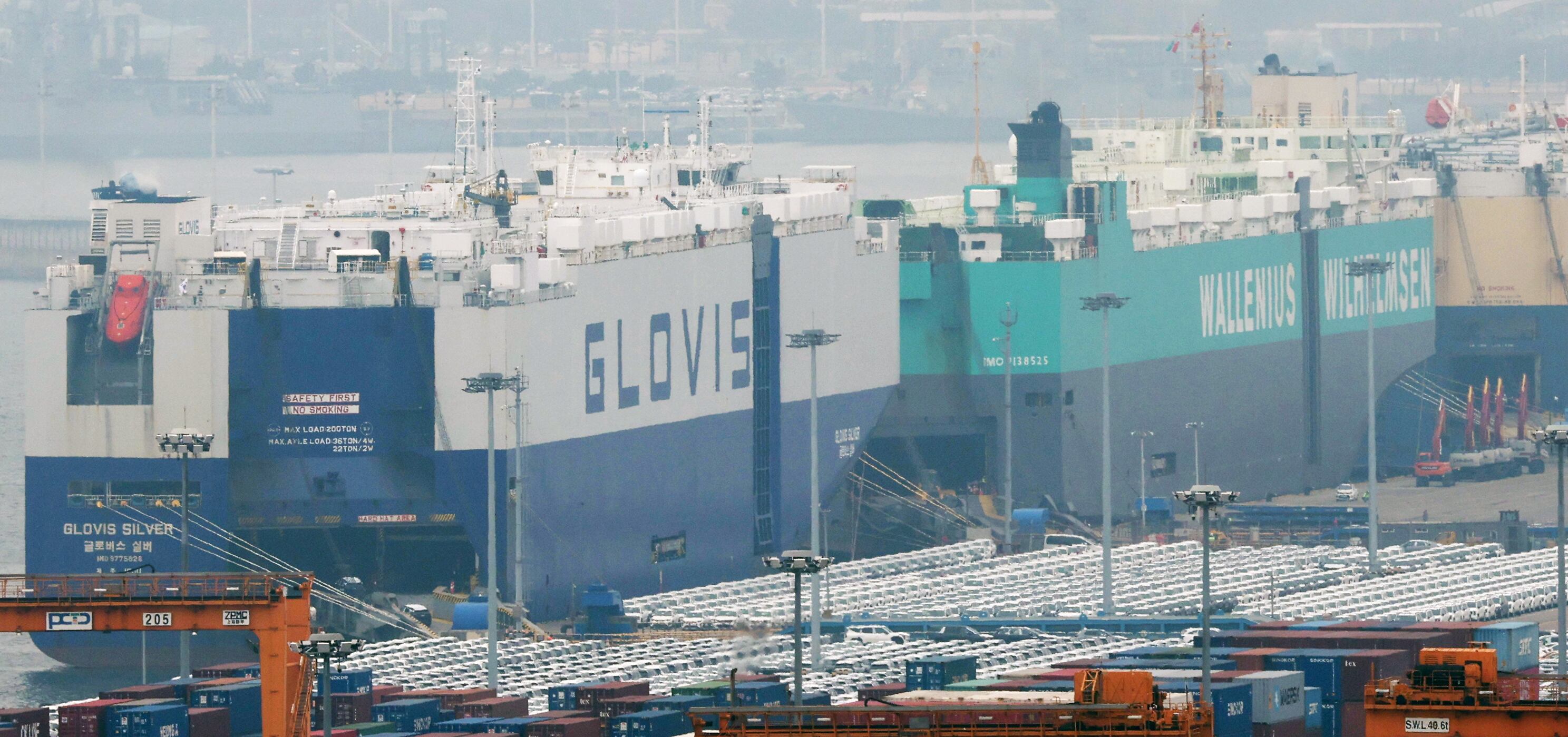
The U.S. President Donald Trump's trade conflicts are anticipated to have a negative impact on worldwide economic expansion, according to the Organisation for Economic Co-operation and Development (OECD). This Paris-headquartered organization revised its prediction for global GDP growth downwards to 3.1% this year, marking a decrease of 0.2 percentage points compared with their previous estimate made back in December.
According to the OECD’s Interim Economic Outlook released on March 17, global GDP growth is anticipated to slow down from an estimated 3.2% in 2024 to 3.1% in 2025 and further to 3.0% in 2026. This slowdown can be attributed to heightened trade barriers across multiple G20 nations along with amplified policy uncertainties affecting both investments and household expenditures. In comparison to their projections made in December, the organization adjusted downward the forecasted yearly GDP growth rates by 0.2 percentage points for this year and by 0.3 percentage points for next year.
The OECD issues preliminary economic assessments in March and September each year, and full economic predictions are published between May-June and November-December. Should these projections prove correct, global growth for 2025 and 2026 would mark the lowest levels observed since 2020, following the 3% decline caused by the COVID-19 pandemic.
The report highlights "increased fragmentation within the worldwide economic system" due to elevated tariffs as a significant worry that might negatively impact global growth expectations. According to the OECD, another potential threat is "the intensification of trade-restrictive actions," which could lead to reduced trading activities and increased costs for imports. Protectionist strategies have compelled governments to increase their military budgets, thereby amplifying long-term financial pressures. Considering these worries, the OECD revised its inflation forecasts upward to 3.8% for this year and 3.2% for next year, each figure marking an uptick of 0.3 percentage points compared with earlier predictions.
Nations closely tied to America through trade are anticipated to suffer most from President Trump's suggested tariff increases. The newest projections indicate that Canada's economic expansion forecast for this year has been reduced by 1.3 percentage points to an estimated growth of 0.7%, whereas Mexico's outlook saw a significant decrease of 2.5 percentage points down to a projected contraction of -1.3%.
The OECD reduced South Korea’s growth forecast by 0.6 percentage points to 1.5% for this year. This adjustment matches the most recent projection from the Bank of Korea yet falls below the forecasts provided by the Korea Development Institute at 1.6% and the government at 1.8%.
"Formerly, traditional diplomatic and security partners were connected through economic collaboration; however, the Trump administration has established a fresh framework where economic advantages dictate trade relationships, even amongst allies," explained Professor Ahn Dong-hyun from Seoul National University’s Department of Economics.
The annual GDP growth forecast for the United States was revised downward from 2.4% to 2.2%. Similarly, the OECD reduced projections for economic expansion in Japan, Germany, and the UK. According to the report, "Real GDP growth in the eurozone is anticipated to reach 1.0% in 2025 and rise slightly to 1.2% in 2026 due to increased uncertainties keeping development at bay." Various European nations continue to grapple with repercussions stemming from American trade strategies and persistent instability caused by the conflict between Russia and Ukraine.
Nevertheless, the OECD increased China’s growth projection for this year by 0.1 percentage points. "China's economy is anticipated to expand by 4.8% in 2025 due to strong policy backing which mostly counterbalances the adverse effects of tariffs; however, it will decelerate slightly to 4.4% in 2026."