Trump Reopens Debate on U.S.-Korea Military Cost-Sharing Deal

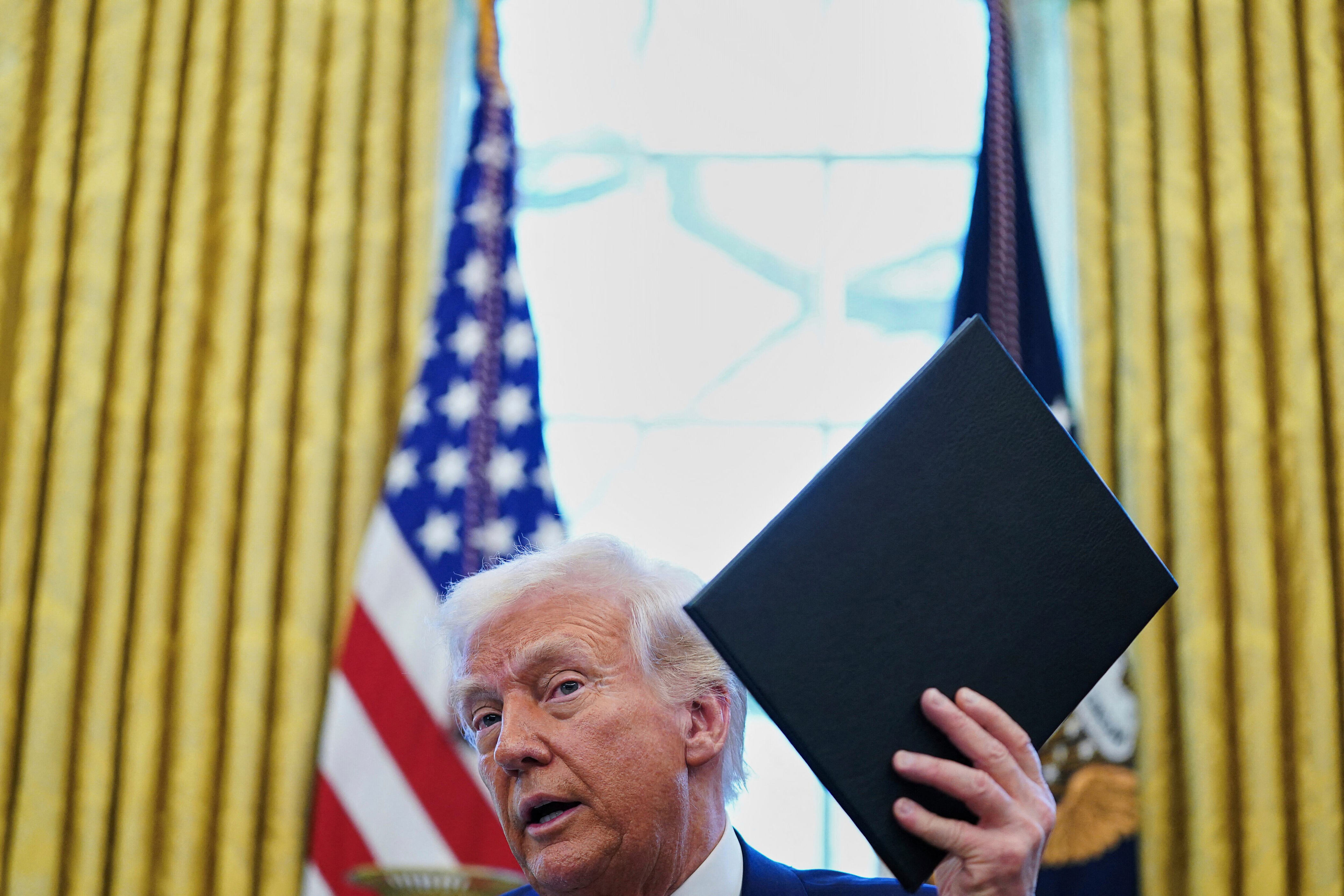
On April 8, U.S. President Donald Trump informed South Korea’s acting president Han Duck-soo that he plans to combine discussions about trade, tariffs, and burden sharing for defense costs into one all-encompassing agreement. He referred to this strategy as "ONE STOP SHOPPING – an elegant and streamlined procedure!"
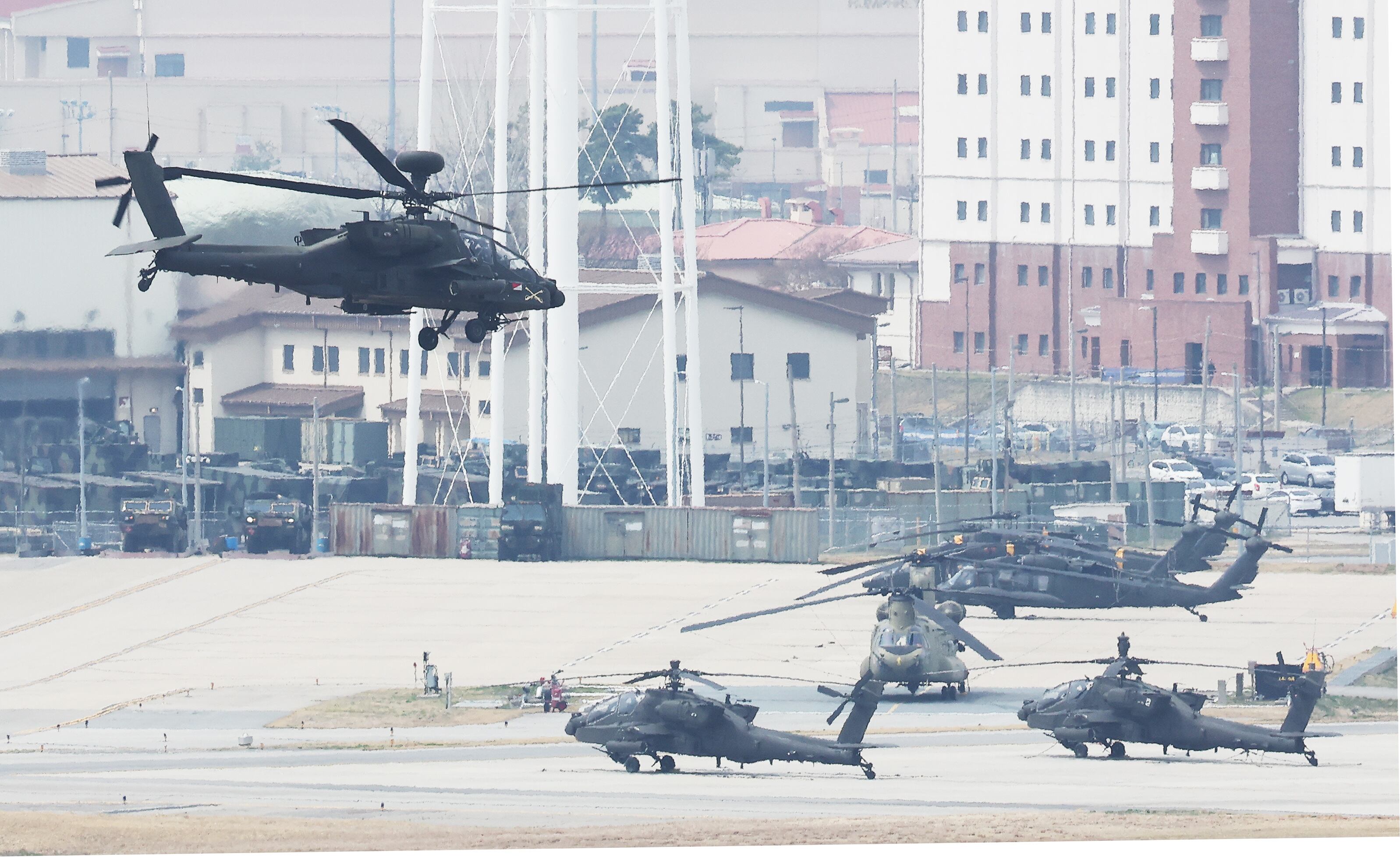
This unexpected action casts uncertainty over the Special Measures Agreement (SMA), which was inked with the Biden administration just half a year prior. It essentially compels them to renegotiate the deal. Signed in October 2024, this pact details South Korea’s monetary contributions toward maintaining U.S. troop presence until 2030.
Given Trump’s recent tariff move has started to undermine the U.S.-Korea Free Trade Agreement (KORUS FTA), authorities worry that the SMA might suffer a comparable outcome.
Experts suggest that South Korea ought to adopt a comprehensive, strategic strategy—one that involves offering necessary compromises while ensuring substantial achievements. Given President Trump’s desire for quick successes in economic diplomacy, impressive results might hold greater importance than intricate specifics.
A comprehensive agreement approach from the top down would be most effective under Trump," stated Yoon Kang-hyun, a previous deputy foreign minister responsible for economic matters, who oversaw talks with the U.S. during Trump’s initial tenure. "Rather than segregating topics by industry, we should aim for an ambitious bundled accord.
Trade Minister Ahn Duk-geun emphasized Seoul's primary focus as maintaining the KORUS FTA. "It is essential for us to sustain this free trade agreement via discussions," he stated to legislators on April 9 at a parliamentary committee meeting.
Trump’s advocacy for "one-stop shopping" has led to suggestions in Seoul that they might integrate defense cost-sharing discussions with wider trade and tariff matters. Certain analysts propose this could involve agreeing to fund the entire expense related to U.S. troops stationed in South Korea.
Trump previously requested a fivefold increase in our contributions, however, his true aim is to secure a deal he can present as a victory," stated ex-foreign minister Yu Myung-hwan. "Should South Korea assume full financial responsibility and receive enhanced U.S. pledges regarding extended deterrence, such as the nuclear shield, this might constitute an acceptable compromise.
Yu also suggested that this agreement might act as a blueprint for Trump to exert similar pressure on NATO partners to increase their military expenditures.
The former foreign minister Song Min-soon supported this view, proposing that South Korea utilize these discussions to renegotiate its bilateral nuclear accord with the United States.
If Trump presents a chessboard, we'll counter with a Go board," he stated. "We will bear the entire expense for U.S. military presence, and as compensation, secure the authority to process uranium just as Japan does.
At present, South Korea needs to seek approval from the United States for uranium enrichment above 20%, whereas Japan has greater independence due to its nuclear cooperation pact with Washington.
Choi Kang, president of the Asan Institute for Policy Studies, said the renewed negotiations must focus on the alliance’s strategic purpose.
There is increasing discussion in Washington about using U.S. Forces Korea as a counterbalance to China," Choi stated. "It is important to emphasize that their primary role remains the defense of South Korea.
He cautioned against concentrating exclusively on costs. "By focusing only on the figures, we might overlook more significant aspects," he stated. "The main objective here is strengthening the U.S.-South Korea alliance in Northeast Asia, particularly considering the escalating tensions in the region involving China."
Yoon warned that an uncoordinated effort by separate government departments might prove counterproductive.
“If each agency negotiates on its own, we’ll lose every time,” he said. “That’s what happened in Trump’s first term—agreements on cost-sharing, Iran sanctions, and more were repeatedly overturned by Trump himself.”
In an April 8 interview with CNBC, U.S. Treasury Secretary Scott Bessent stated that President Trump intends to directly supervise tariff and trade discussions. Additionally, White House spokesperson Karoline Leavitt mentioned that the administration might incorporate decisions regarding U.S. military deployments and international assistance within comprehensive trade talks, highlighting that Trump prefers a customized strategy based on each individual nation involved.
As per the present SMA, South Korea committed in October 2024 to increase its funding for maintaining U.S. forces within its borders by 8.3%, upping it to 1.52 trillion won ($1.13 billion) starting from 2026. This agreement was reached after undergoing eight negotiation sessions and will be valid until 2030.
This sum represents approximately 0.06% of South Korea’s gross domestic product and nearly 40% of the country’s non-personnel expenses related to stationing troops, although certain estimations suggest this contribution could be over 50%. In contrast, Japan reportedly covers roughly 70% of these costs.