Experts Unveil Easier Way to Detect Prostate Cancer More Accurately Than Blood Tests

A urine examination for prostate issues cancer has proven to be significantly more precise in identifying the most prevalent type of cancer in men compared to the currently utilized blood tests.
The novel method has become the leading contender for upcoming clinical trials, sparking hope that, for the first time, a regular screening process might be feasible.
The updated technique checks for proteins released by prostate tumors, which can be identified in urine. The Times reported.
A trial aiming to transform case identification methods is currently underway, enrolling between 250,000 and 300,000 British males over the coming eight years.
According to a study published in the journal Cancer Research, the new test attained an AUC score of 0.92 using archived specimens from individuals with prostate cancer.
The score represented a notable enhancement over conventional prostate-specific antigen (PSA) testing, typically having an area under the curve (AUC) ranging from 0.65 to 0.75.
At present, over 12,000 males are involved. die each year from prostate cancer in the UK, where over 52,000 new cases are diagnosed annually.
Lately, there has been an increase in recommendations for regular screenings. The situation escalated following Olympic cyclist Sir Chris Hoy's announcement about his terminal prostate cancer diagnosis in the previous year.

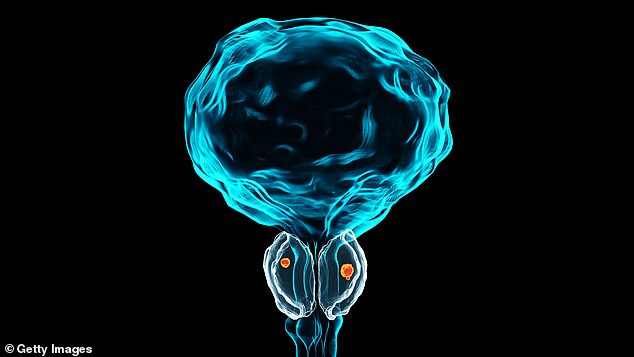
Nevertheless, specialists concur that currently, the testing methodologies are insufficiently precise for screening purposes.
Presently, PSA tests are recognized for their insufficient precision, resulting in both false alarms and undue biopsies as well as overlooked cases.
Nevertheless, these new tests not only offer highly precise detection of prostate cancer but also provide an indication of the disease's severity.
It is only after a major clinical trial gets underway that experts will be able to determine how well it performs in real-world conditions.
Professor Rakesh Heer, who leads the Department of Urology at Imperial College and is involved with the Transform study group, informed The Times that this £42 million initiative represents one of the most significant diagnostic trials in recent decades.
This might be 'a game changer' for the entire field of prostate cancer research, he mentioned.
Mikael Benson from the Karolinska Institute in Sweden, who headed the research, stated: "More accurate biomarkers compared to PSA have the potential to enable earlier detection and improved outcomes for men suffering from prostate cancer. Additionally, these markers might help decrease the number of unwarranted prostate biopsies performed on individuals without the disease."
Read more